Our Story
Eleven generations and nearly 300 years so far, from the Rhineland to the Motor City, from the American Revolution to Tokyo Bay. There are over 4000 Kratzer/Krotzers in the USA with many lineages and even multiple pronunciations. This is the story of our direct paternal lineage, our Y chromosome, and its journey through time and geography. For some reason, our lineage has preserved the German pronunciation of our name for centuries despite linguistic resistance in our new home.
Probable Ancestral Homeland
Surnames were quite regional in 18th Century Europe. Though there were some Krazer/Kratzers in Bavaria, and a few other locations, the name is distinctively associated with Rhineland/Palatinate. Also called “the Pfalz”, it has a rich and complicated history even by European standards. Julius Caesar’s legions founded its cities and vineyards two thousand years ago. The region became one of seven electorates entitled to choose the Holy Roman Empire, hence a “palatinate.” The University of Heidelberg was founded in 1386, among the oldest of Europe. The region is still often called the “Tuscany” of Germany for its castles, Roman ruins, vineyards, and one of the largest forests in Europe.
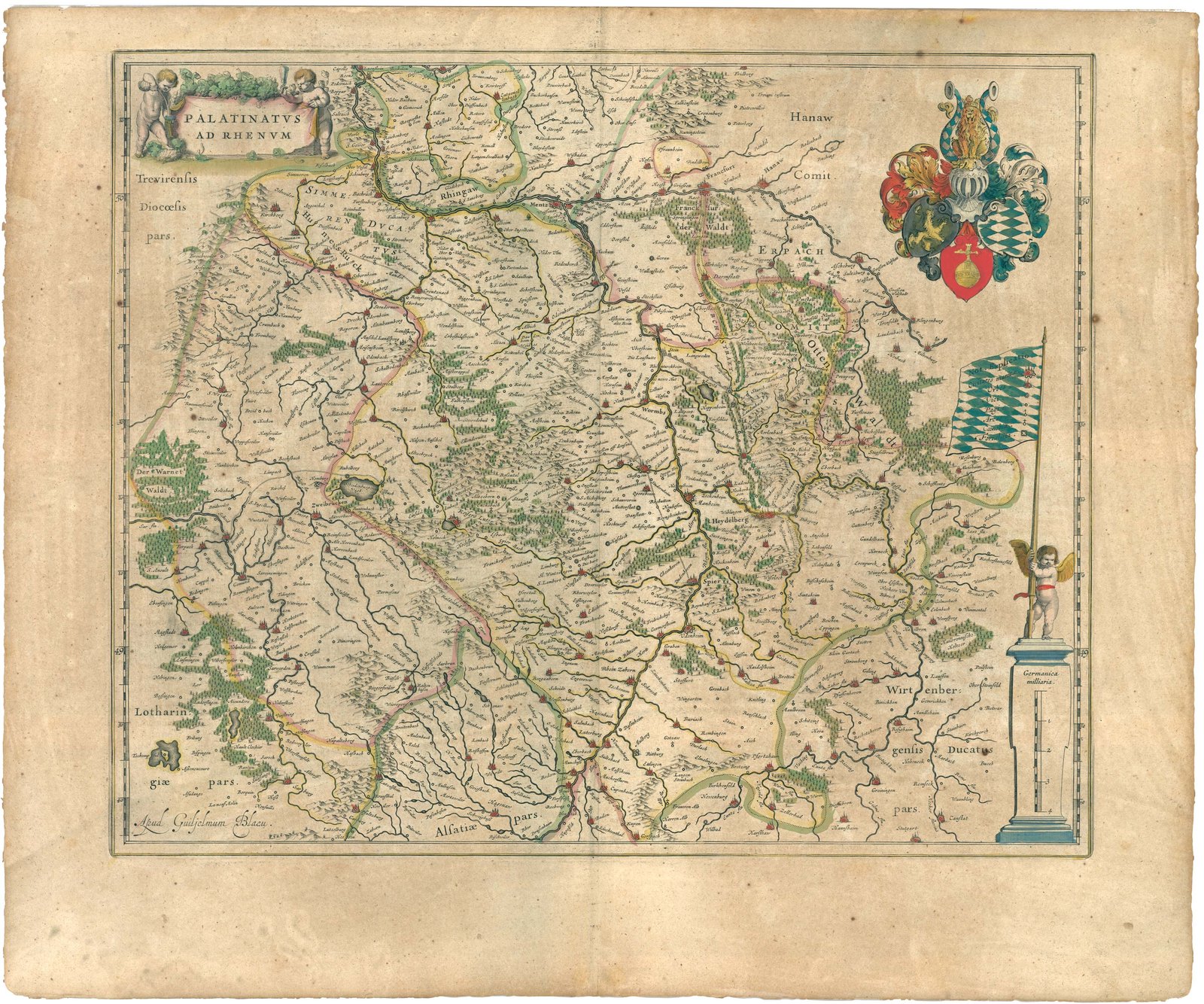

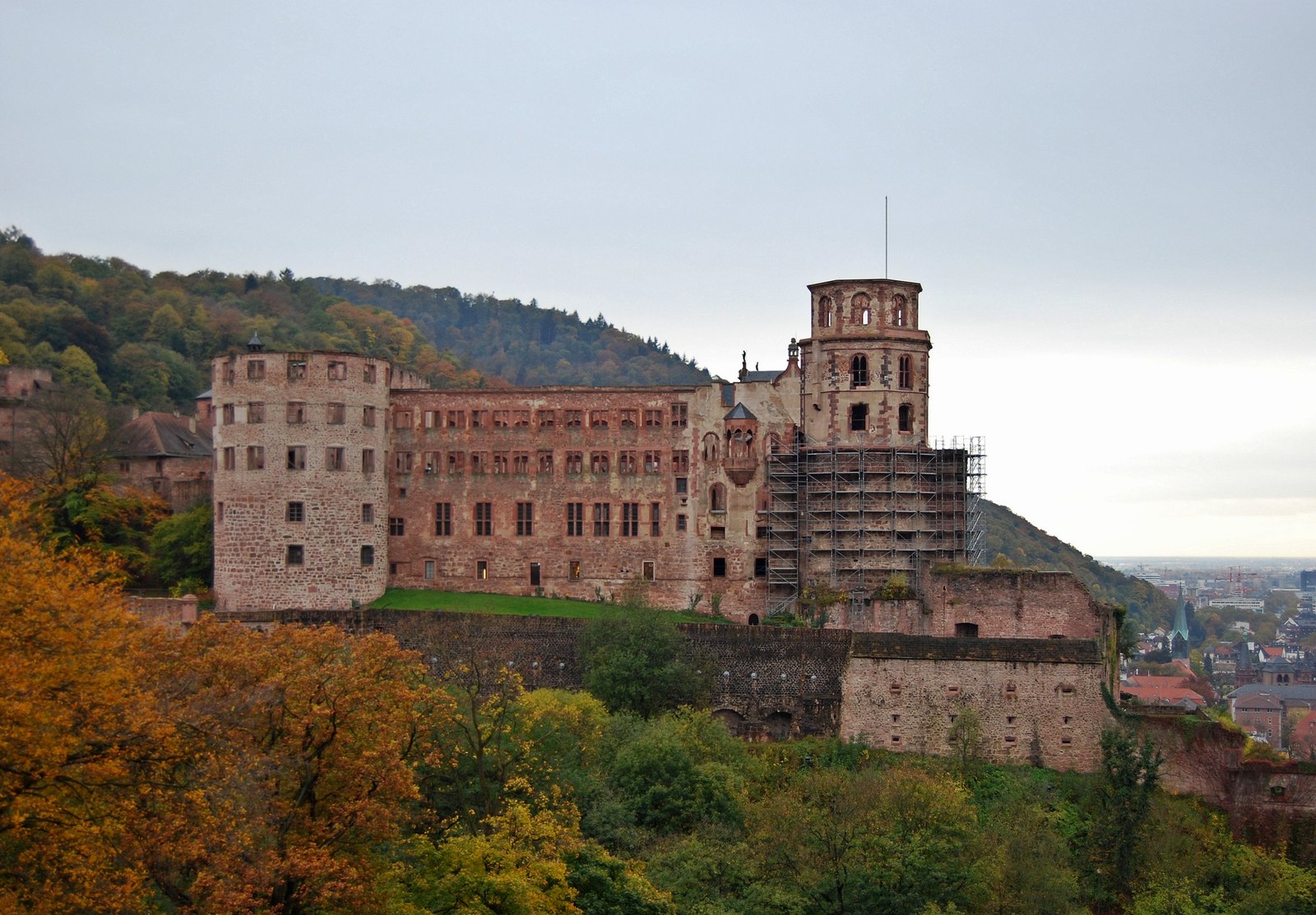
However, there was much suffering and turmoil leading to mass emmigration in the mid 18th century. The region was particularly a victim of the Thirty Years War between Catholics and Protestants, 1618-1648, resulting in the murder of a third of the population. It was occupied by Louis XIV for decades, destroying the Heidelberg castle in 1688 which remains a ruin. There was heavy wartime taxation and a “little ice age” of brutal weather. Between 1730 and 1740 thousands of Palatines abandoned their homeland, many became the “Pennsylvania Dutch” in America. One of those immigrants was Johann Phillip Krazer/Kratzer born near Heidelberg circa 1695, and dying in Pennsylvania circa 1788.

The Crossing
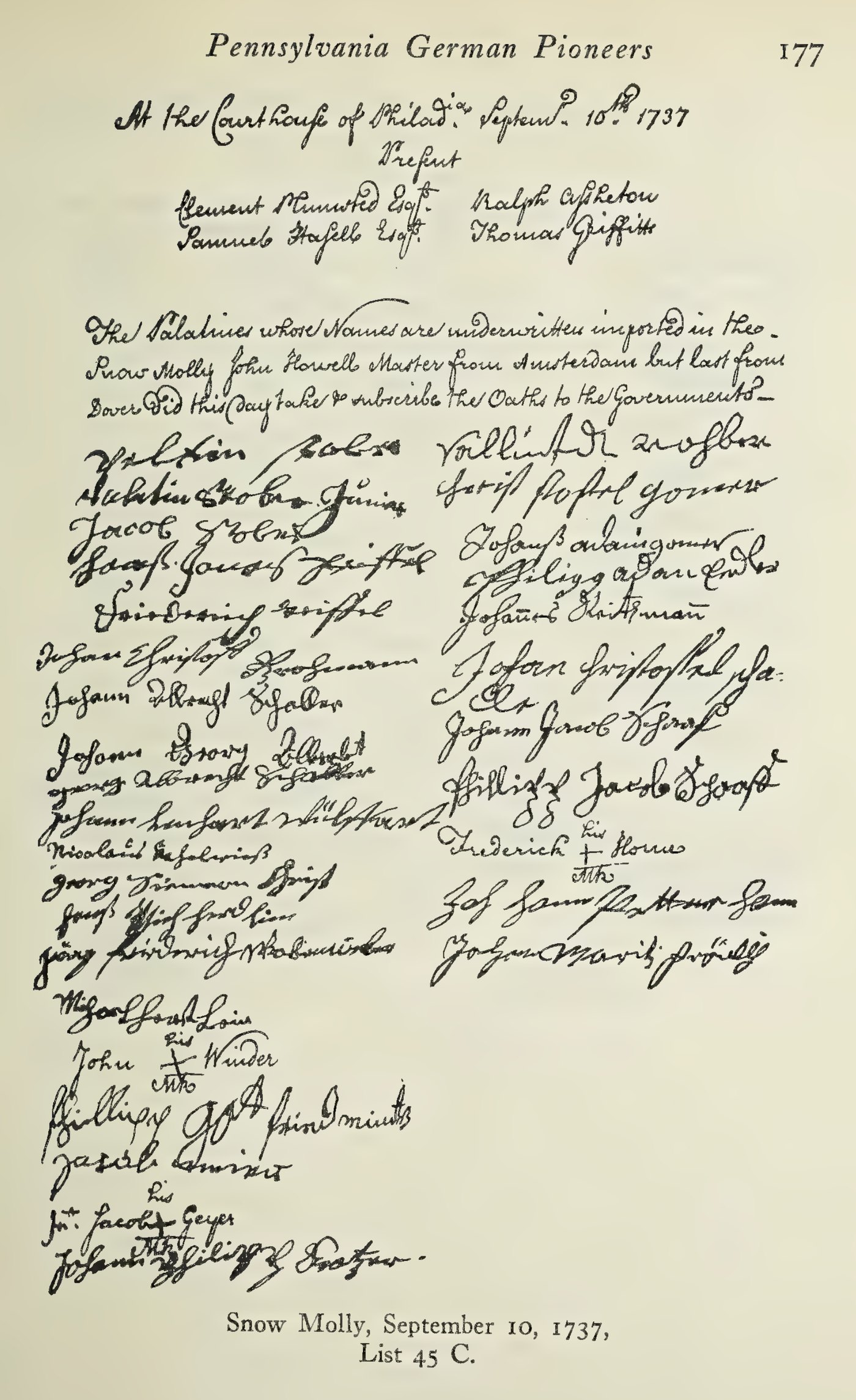
Lets call him Johan Phillip “the elder” to distinguish from his grandson. His passage to America on The Snow Molly is well documented. Imagine leaving everything familiar at age 27, including War, Taxes, and brutal weather. He traveled weeks down the Rhine to Rotterdam or Amsterdam before crossing the English Channel to Dover to board the Snow Molly. Then followed a harrowing six to ten week voyage across the Atlantic. Not everyone survived. The Snow Molly under captain John Howell was three masted, about a hundred feet long, crewed by 15-20 sailors. There were about one hundred adult passengers, 95 of them fellow Palatines, and 50 or so dependents, women and children. The names of dependents were customarily not recorded at arrival. The Snow Molly landed in Philadelphia on 10 September 1737. Adult males were allowed ashore to record their names as passengers and to document their oath of allegiance to King George II of Great Britain. Our best assessment at present is that Johann Phillip’s son, Johan Heinrich, accompanied him as a dependent. Neither of them could have imagined that Johan Phillip ‘the elder’s’ grandson and namesake would rescind that oath to fight for the colonists in the American Revolution.
We know a few facts about Phillip the elder; birth and death dates, home of origin, arrival documentation, but there is no identified grave site. Maybe he had a wife with him on the crossing. The connection with his son is probable but not certain, as of this writing. His (presumed) son Johan Heinrich has an identified grave site, the stone written in German. There are other records identifying him as a farmer, paying taxes, and orphan courts proceedings upon his death. His surname is spelled Kratzer on his gravestone. Most of the Kratzer immigrants to America from Palatinate kept the German spelling but surrendered the pronunciation to the native anglophones, Kratzer rhymes with crap. For example the town of “Kratzerville” in Pennsylvania. Phillip the younger changed the spelling to Krotzer and maintained the German pronunciation, Kr-ah as in father, which we have continued father to son ever since. The Northampton County Historical and Genealogical Society was extremely helpful in dissecting our lineage from the many other Kratzers of the time, and their work was later vindicated by rediscovered family records.
The Revolution
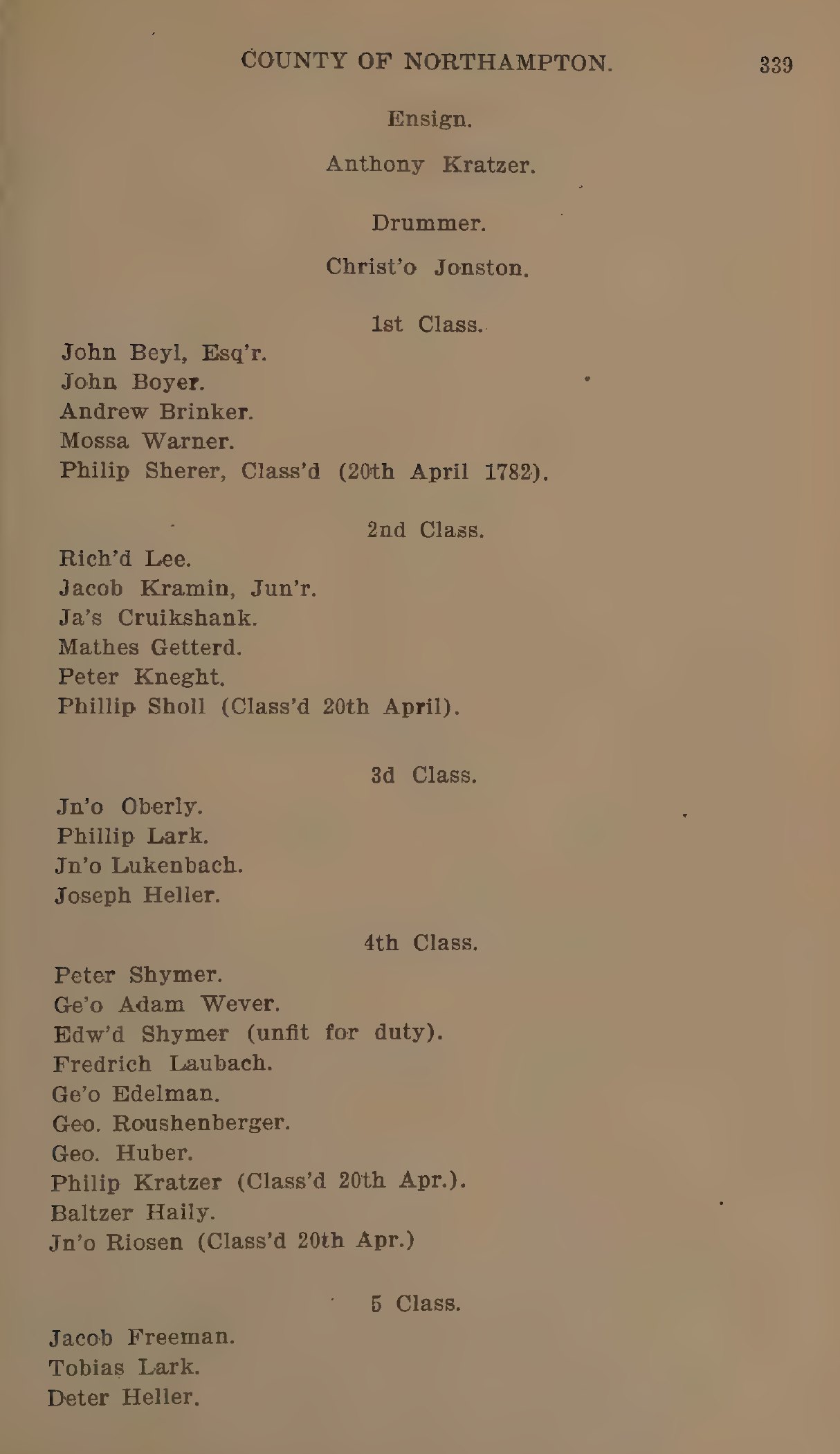
Heinrich’s son, Johan Phillip “the younger” and his sister were orphaned when Heinrich died in 1778 and appointed guardians, John Oberly and Simon Dreisbach respectively, prominent German families, among the first settlers in the region. After emancipation at age 18, that very guardian enlisted Phillip in the 4th company, 4th battalion of the Northampton County militia. In fact his guardian and older brother Anthony all joined the same unit. This was after the battle of Yorktown, so it is unlikely they saw combat, however they had no guarantee of that when they joined the Continental Army to fight for our independence. Johan Phillip Krotzer is recognized as a soldier of the Revolution, his grave is respectfully cherished by the Daughters of the American Revolution with maintenance, historical marker, and a crisp, fresh flag. Phillip married Catherine Jacoby and moved the entire family to the Western frontier, Clarion, Pennsylvania. His family is on record in the first American census of 1790.
A family divided
Philip's son John became a stonemason in Clarion County; some of the gravestones he carved reportedly still stand at Churchville Cemetery today, all of them facing East except one — his own third son Jacob's, which faces West, “the custom regarding the spiritual leader of the community.” John and his wife Anna Mary Rime had seven children, and the Civil War split them the way it split the nation: Daniel, the second son, joined the Confederacy along with one of his own sons, while two other sons, Reuben and Henry, wore Union blue.
Our direct ancestor Henry J. Krotzer, born 1833, served nearly the entire war with Company F of the 67th Pennsylvania Infantry. Action included Fredericksburg, the Wilderness, and the Battle of Monocacy Valley in July 1864, “the battle that saved Washington,” where a badly outnumbered Union force bought Washington, D.C. just enough time for reinforcements. Henry’s commanding officer was General Lew Wallace, who would later write Ben-Hur. Future generations of Krotzers would by coincidence live in Frederick, Maryland just a mile from the battlefield. A powder horn survives from Henry, hand-lettered with his name and exact birthdate. After the war Henry moved his family south to Winchester, Tennessee, where he was reportedly teased as a "carpetbagger" by his new neighbors, but Eastern Tennessee was pro Union. He was an accomplished carpenter as well as a farmer, and married three times, fathering fourteen children in all. He also started a family tradition that's still on going: his prized saw, carved with his own initials. Every generation since has added their mark to it (see the Saw).
Navy Tradition Begins
Henry’s youngest son by his first wife, Milton, fared less well by comparison: Milton's first child died in infancy, then his wife died delivering their son Duran. By the family's own account Milton “seems to have been missing in action” afterward, leaving the boy to be raised by his sister, a spinster aunt affectionately known as “Mamie.” Duran had a Tom Sawyer like upbringing — “a garden, one cow, chickens, and a glorious grape arbor” then left rural Tennessee to see the World. He joined the Navy around 1911 and served aboard the armored cruiser USS Montana, which saw the 1913 Balkan War and, in 1919, made six trips repatriating American troops home from France. He was also a Freemason. After his honorable discharge he married Laura May Chitwood of Estill Springs, Tennessee, in Chattanooga in 1916 — though by then he'd already moved to Detroit, where he worked as a tool-and-die tradesman at the Dodge and later Chrysler plants. By his son’s account he was fired at the height of the Depression for organizing with a union.
Laura's family carried its own considerable lore: seven siblings, a tradition of teaching, and ties to Sharp College in Winchester — founded in 1851 as one of the first women's colleges to grant degrees equal to the men's colleges of its day. The Chitwoods freed their own slaves in the 1850s, sending them to Liberia; Laura’s Chitwood great-grandfather fought for the Union despite being from the South.
Duran and Laura raised three sons in a two-bedroom house in a Polish and Italian Detroit neighborhood near Hamtramck. The only heat was from a coal stove in the living room. Albert Ray, the eldest, joined the Army. George Milton followed his father into the Navy, as did Robert Keith.
Detroit in its Heyday
Robert Keith Krotzer grew up protected by his older brothers in a bustling Detroit. The decade of the 1920s saw Detroit tripling its population to become the 4th largest city in the US. 75% of that population were immigrants or first generation. At Pershing High School Robert met Christine "Penny" Zurawka the daughter of Polish immigrants John F. Zurawka and Lillian Rose Stafinski. In 1946 Robert converted to Catholicism to marry her. Our German Protestant line that had been in America since 1737 now married into a Polish Catholic family that had arrived within living memory — two very different immigrant stories, meeting in Detroit’s ethic neighborhoods. Such a contrast to the religious wars of the Rhineland.
The Day Japan Surrendered
Robert graduated high school entering the Depression-era job market and was promised a trade position at Ternstedt — until it went to the foreman's son instead. Rather distraught, by family legend, he walked straight from that disappointment into a Navy recruiting office and signed on for six years. It was 1939, two years before the United States entered the war. He was on shore leave at a Norfolk movie house one evening, while serving aboard the seaplane tender USS Albemarle at the time, when the film stopped, the lights came on, and every serviceman in the theater was ordered to report to his post immediately. The announcement: We are at War! Pearl Harbor had just been attacked.
By 1942 Robert had volunteered for submarine duty as a Pharmacist's Mate aboard the USS Pilotfish — the only medical staff aboard a diesel submarine at war in the Pacific. He was trained at the Naval Hospital in Balboa Park, San Diego. He carried written step-by-step instructions for performing an appendectomy at sea, on the reasoning that "it won't rain if you carry an umbrella." His shipmates called him "Doc" for the rest of his life. The Silent Service lost roughly one submarine crew in five during the war; the Pilotfish ran silent under Japanese depth charges more than once, and at times patrolled as part of a three-boat "Wolfpack."
He was there for the end of it, as he describes in his own words
“A submarine operates alone, mostly. We were escorted the last and first 4 or 5 hours into and out of port so that ‘friendlies’ would not attack us. After that we were alone…awfully alone…usually at far advanced spots to harass the enemy. So it was the day the war ended; alone off Honshu, the big Japanese island, on rescue duty for the bombers from Saipan and the fighter planes from Iwo Jima. We were assigned to Tokyo Bay with the fleet for the peace signing and I was on lookout when we saw them (the fleet) a couple of days later. Suddenly the horizon was filled with masts…like a picket fence. Hey, we weren't alone!…hooray for our side. The Pilotfish flew down between two lines of ships…flank speed…showing off, I guess…as horns blew all around. Soon other subs joined in and we all steamed into Tokyo Bay where McArthur signed the war's end aboard the USS Missouri. How can I forget that day?”
He carried a card in his wallet for the rest of his life certifying his presence aboard the Pilotfish for the formal Japanese surrender, signed by Fleet Admiral Chester Nimitz, Vice Admiral Charles Lockwood, and Admiral William Halsey; a Detroit newspaper published his name under the headline "Witnesses Japanese Formal Surrender." Half a century later, Robert’s son Steven would have the honor of treating a Japanese patient at the Mayo Clinic who described that same day. Her mother brought her to Tokyo Bay to see the huge armada when she was a girl. She waved to the American sailors, maybe to Robert!
Meanwhile his fiancé Penny had trained as a nurse and finished the war a commissioned Navy ensign at Great Lakes Naval Base, outranking the enlisted chief petty officer she'd go on to marry. Robert used the GI Bill for pharmacy school after the war, becoming the first college-educated professional in this family's three-hundred-year American line. The Pilotfish itself became a target ship in the postwar Bikini atomic bomb tests, and it now rests permanently at about 80 feet. Robert liked to joke that the Pilotfish "was always quite comfortable at that depth."
Thanks to the “Greatest Generation” Robert and Penny’s children and grandchildren experienced educational opportunities, affluence, and an international lifestyle such that Johann Phillipp and the first American Krotzers could have never even imagined.